How to Remove Sunscreen From Your Car Interior
By Ezequiel Sazo — Wash N Style, Long Island
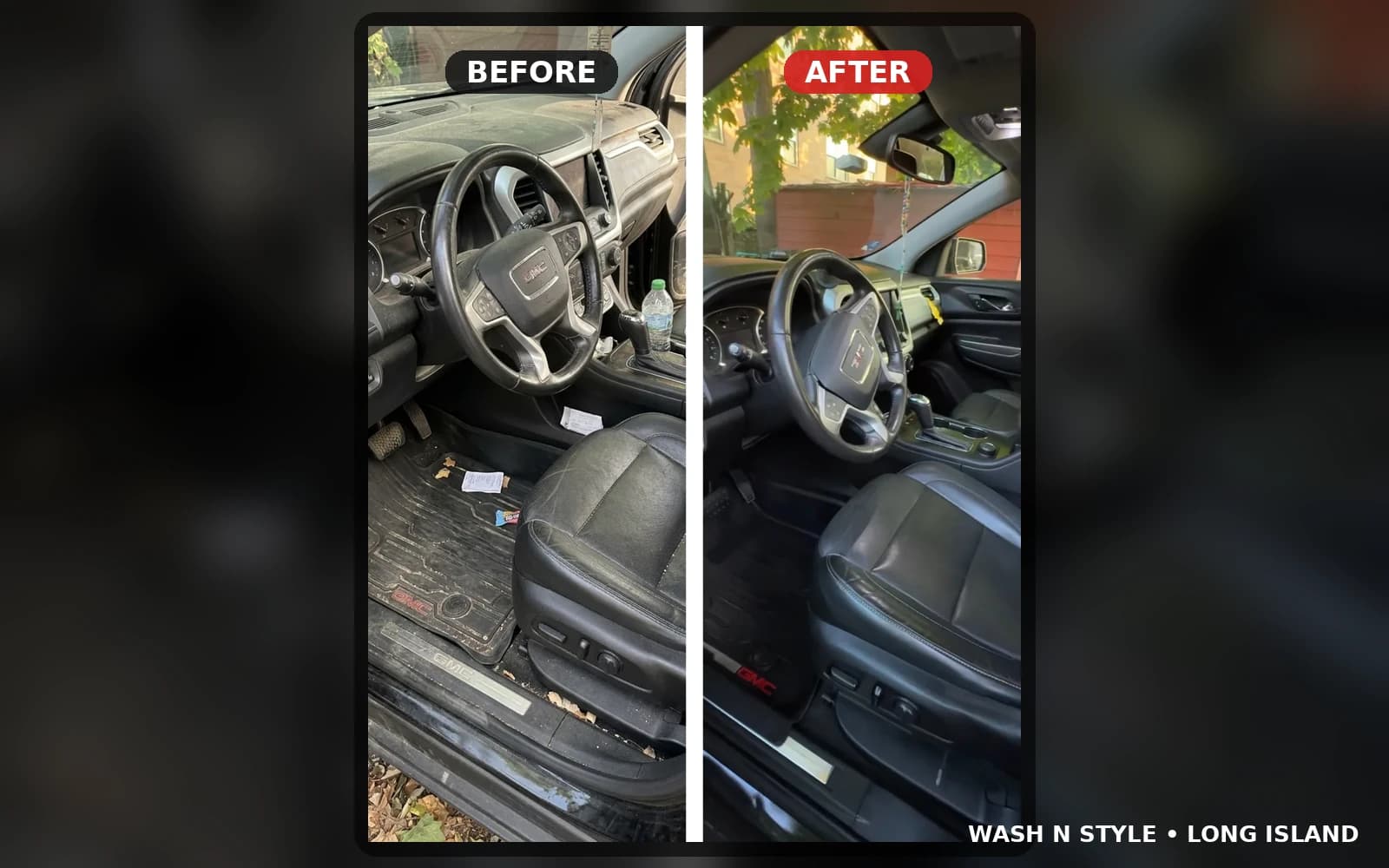
By August, sunscreen ends up all over a Long Island daily driver. It transfers from your hands to the steering wheel, from your arm to the door panel, and from kids heading home after the beach or pool to the seats. Dark leather, vinyl, and plastic show the white streaks right away. On lighter material, the oily residue can sit unnoticed until it starts holding dust and grime.
A fresh mark will often come off safely. The damage usually starts when someone reaches for a household degreaser, an abrasive sponge, or too much water.
Why sunscreen sticks to car interiors
Sunscreen is made to stay on skin through heat, sweat, and water. That also makes it stubborn when it transfers to a car interior.
Mineral formulas containing zinc oxide or titanium dioxide can leave a visible white film. Other formulas may leave a greasy transfer. Inside a hot parked car, that residue can settle into textured plastic, seat stitching, and perforated upholstery. A quick dry wipe often spreads it into a larger streak.
The most common trouble spots are:
- Door panels and armrests where bare arms rest during the drive
- Leather or vinyl seat bolsters that rub against legs and shoulders
- Steering wheels and center consoles touched after sunscreen is applied
- Seat belts pulled across sunscreen-covered skin
- Cloth seats and carpets after sunscreen, sweat, and beach sand arrive together
What to do while the mark is fresh
Check the cleaning section of your owner's manual first, especially on newer synthetic upholstery or specialty leather. Different manufacturers allow different products. Ford's interior-cleaning guidance recommends a soft damp cloth with mild soap and water for many surfaces and warns owners to confirm product compatibility in the manual.
Start with a clean microfiber towel that is lightly damp, not soaked. Blot or wipe gently and turn the towel as it picks up residue. If you use an automotive interior cleaner, make sure it is made for that specific material and test it in a hidden area first.
On cloth, avoid flooding the spot. Too much liquid can push sunscreen deeper into the cushion and leave a larger ring as it dries. On perforated leather, apply cleaner to the towel instead of spraying the seat so liquid does not collect in the holes.
Stop if the surface changes color, becomes tacky, or transfers dye onto the towel. One cautious attempt is safer than repeatedly scrubbing the same spot.
What not to use
A strong product can remove the stain and the factory finish with it. Avoid these shortcuts:
- Magic Erasers and other abrasive sponges. They can dull coated leather, vinyl, and plastic.
- Household degreasers or glass cleaner. Interior trim can discolor or dry out.
- Cleaner sprayed directly onto switches, seams, or perforations. Put the product on the towel instead.
- Heavy soaking. Electronics, seat foam, stitching, and seat-belt mechanisms should not be flooded.
- Shiny dressing over the residue. It hides the mark temporarily and leaves a surface that grabs more grime.
If a gentle pass does not improve the mark, leave it alone until the material can be inspected. Repeated DIY attempts are where a small transfer mark becomes faded trim or a damaged topcoat.
Which Wash N Style service fits the job?
The right service depends on whether sunscreen is the only issue or part of a bigger summer mess.
| Interior condition | Best fit | Starting price |
|---|---|---|
| Light surface transfer and a generally tidy cabin | Interior Only Detail | $100 |
| Sunscreen plus stains, sand, dirty upholstery, or an overdue cleaning | Full Detail | $250 |
| Leather that needs cleaning and conditioning | Leather Conditioning add-on | $35 |
The Interior Only Detail includes a deep vacuum, surface wipe-down, interior windows, floor mat shampoo, and a clean finish. It fits a cabin that needs focused attention while the exterior is already in good shape.
The Full Detail adds stain spot-treatment plus leather and upholstery cleaning, along with a complete exterior detail. It is usually the better move after repeated beach days, when sunscreen is mixed with sand, food, sweat, and normal family use.
Prices start at the amounts above. Vehicle size and heavy soilage can affect the quote, and we confirm that before the work starts. No honest detailer can promise every old mark will disappear without seeing the material and its condition first.
How to prevent the next round
You can protect your skin without letting residue build up all summer:
- Let sunscreen absorb before getting into the car when possible.
- Keep a clean microfiber towel in the door pocket for fresh transfers.
- Put a washable towel over the seat after Jones Beach, pool, or sports days.
- Wipe high-contact areas regularly instead of waiting until the end of summer.
- Book a deeper interior reset before oily residue, sand, and dirt become one layered mess.
Get your interior cleaned at home
If sunscreen streaks are covering the door panels, seats, or console, do not gamble on a random household cleaner. Wash N Style brings mobile interior detailing to homes across Long Island, so your car gets cleaned in the driveway while you handle the rest of your day.
Request your detail online or call (631) 212-1761. Tell us where the sunscreen marks are and what material they are on so we can recommend the right service.
Ready to Book Your Detail?
We come to you anywhere on Long Island. Call (631) 212-1761 or book online.
Book Now